

Comprehensive Guide to WEEE: Disposal, Collection, Recycling, and Current Regulations in Italy
We live in an era where Electrical and electronic equipment They are an integral part of daily life. Smartphones, appliances, computers, and electronic devices accompany us every day, but at the end of their life cycle, they become Waste Electrical and Electronic Equipment (WEEE).
The WEEE waste management, the correct e-waste disposal and the metal recycling are not just a regulatory obligation, but a key element of theCircular economy and environmental protection in Italy.
In this in-depth guide, you will discover:
- What is WEEE
- How does it work disposal of domestic and professional WEEE
- what are some municipal collection centers
- What does it provide Current WEEE regulations
- Why WEEE represent a strategic resource
RAEE stands for Waste Electrical and Electronic Equipment (WEEE).
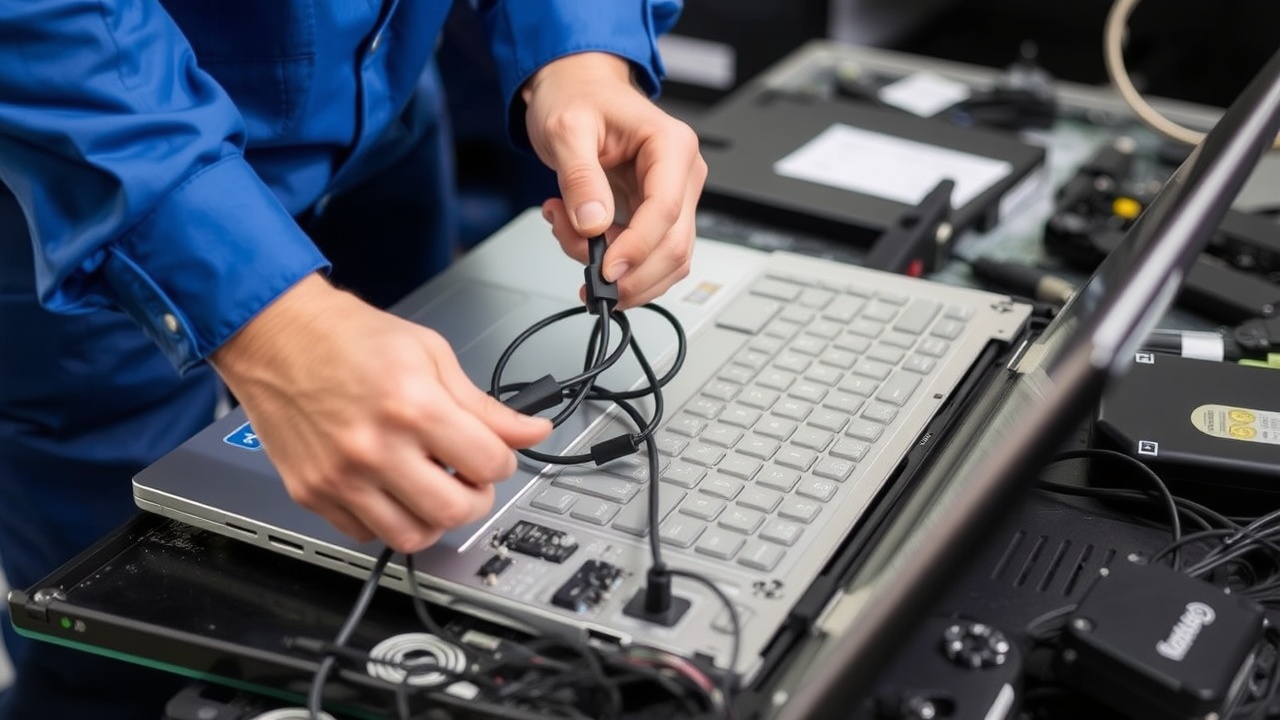
I WEEE (Waste Electrical and Electronic Equipment) they are all waste deriving from electrical or electronic equipment that work thanks to the electric current electromagnetic fields.
According to the Legislative Decree of March 14, 2014, n. 49, all equipment that the holder intends to dispose of falls under WEEE, whether it comes from household nuclei as part of professional activities.
WEEE are classified as Special waste.
RAEE, or Waste Electrical and Electronic Equipment, are not common waste because they contain hazardous materials and valuable resources that require special handling and recycling processes.
I Electrical equipment waste they present a dual nature:
Environmental risk
They contain dangerous substances such as:
- Mercury
- lead
- refrigerant gases
- Flame retardants
A mistake e-waste disposal can contaminate soil and groundwater.
Economic value
WEEE are a valuable source of:
- iron
- frame
- aluminum
- precious metals
- Rare earth
Detailed Classification: The 5 Groupings
To maximize material recovery and safely treat hazardous substances, the Italian supply chain (managed by the RAEE Coordination Center) has divided these wastes into 5 major families. Knowing these categories will help you always choose the correct bin at the recycling center.
R1 - Cold and Climate
It is perhaps the most critical category from an environmental standpoint.
- What's included: Refrigerators, freezers, air conditioners (fixed and portable), water heaters, and heat pump dryers.
- The criticality: The refrigeration circuit contains gases that, if released, damage the ozone layer or heavily contribute to the greenhouse effect. Treatment plants must evacuate these gases in depressurized environments before shredding the casing.
R2 - Big Whites
They are the "heavyweights" of household waste, rich in ferrous metals.
- What's included: Washing machines, dishwashers, microwaves, built-in ovens, electric hobs, and extractor hoods.
- The value They are predominantly composed of iron, aluminum, copper, and plastic. The material recovery rate from these devices often exceeds 90%.
R3 – TV and Monitor
A rapidly evolving technological category.
- What's included: Old cathode-ray tube televisions (the old "boxes"), flat-screen LCD, LED, Plasma, and computer monitors.
- Attention: Old cathode ray tubes contain hazardous fluorescent powders and large amounts of lead in the glass, which require very specific treatment.
R4 – IT and Consumer Electronics, Lighting Equipment
It is the most heterogeneous and numerous group, often a victim of incorrect disposal in residual waste due to its small size.
- What's included:
- Informatica PC desktops, tablets, printers, mice, keyboards.
- Telephony Smartphones, landlines, chargers.
- Small appliances Blenders, toasters, hairdryers, electric shavers, electric toothbrushes.
- Consumer electronics Video cameras, cameras, drones, video game consoles.
- Other: Photovoltaic panels (managed with specific protocols).
R5 – Light Sources
Often confused with glass, they should never be thrown in the glass recycling bin!
- What's included: Neon tubes, energy-saving lamps (CFLs), LED lamps.
- Exclusions Old incandescent or halogen light bulbs are not WEEE and should be disposed of in general waste.
How to Dispose of WEEE: Rights and Methods
Many citizens complain about the difficulty of disposing of these items. However, Italian legislation now offers three main avenues, two of which directly involve retailers.
A. Municipal Recycling Centers (Ecological Islands)
Each municipality (or consortium of municipalities) has a equipped ecological island.
- How it works: The citizen goes to the center (often requiring a health card or waste pass) and deposits the WEEE in the correct container (R1, R2, etc.).
- Advantage It is always free and accepts large volumes.
- Disadvantage Requires transport by own means, which can be difficult for a refrigerator.
B. The "One-on-One" Withdrawal (Ministerial Decree 65/2010)
This is a right established by law.
- The rule: When you buy a new electrical/electronic appliance (both in physical stores and online), the seller is obliged to collect for free your old used appliance, provided it is "equivalent."
- Example: Are you buying a new TV? The store must pick up the old TV. You can't deliver a fridge if you buy a razor.
- Even online? Yes! Amazon, MediaWorld online, Unieuro online, and all e-commerce businesses operating in Italy must offer this service. It often needs to be selected in the cart.
C. The "One Against Zero" Withdrawal (D.M. 121/2016)
A true revolution for micro-waste, but still little known.
- The rule: Large electronics stores (with a sales area larger than 400 sqm) are obligated to collect WEEE of very small dimensions (longest side less than 25 cm) free of charge and without any obligation to purchase.
- What can you bring: Broken smartphones, old remote controls, mice, chargers, light bulbs.
- The advantage: Enter, find the designated container (usually at the entrance or near the checkouts), deposit, and leave. No cost, no questions asked.
Practical Guide: What to do if the shopkeeper refuses?
Unfortunately, it happens that some merchants engage in obstructionism.
- Cite the law: Mention Ministerial Decree 65/2010 (1 on 1) or 121/2016 (1 on 0).
- Insist on it being free: The disposal is already paid for by consumers through the WEEE Eco-contribution visible on the receipts for new products. It's not a favor, it's a prepaid service.
- Report: If the refusal persists, you can report the store to the Local Police or consumer associations. The penalties for non-compliant shopkeepers are steep.
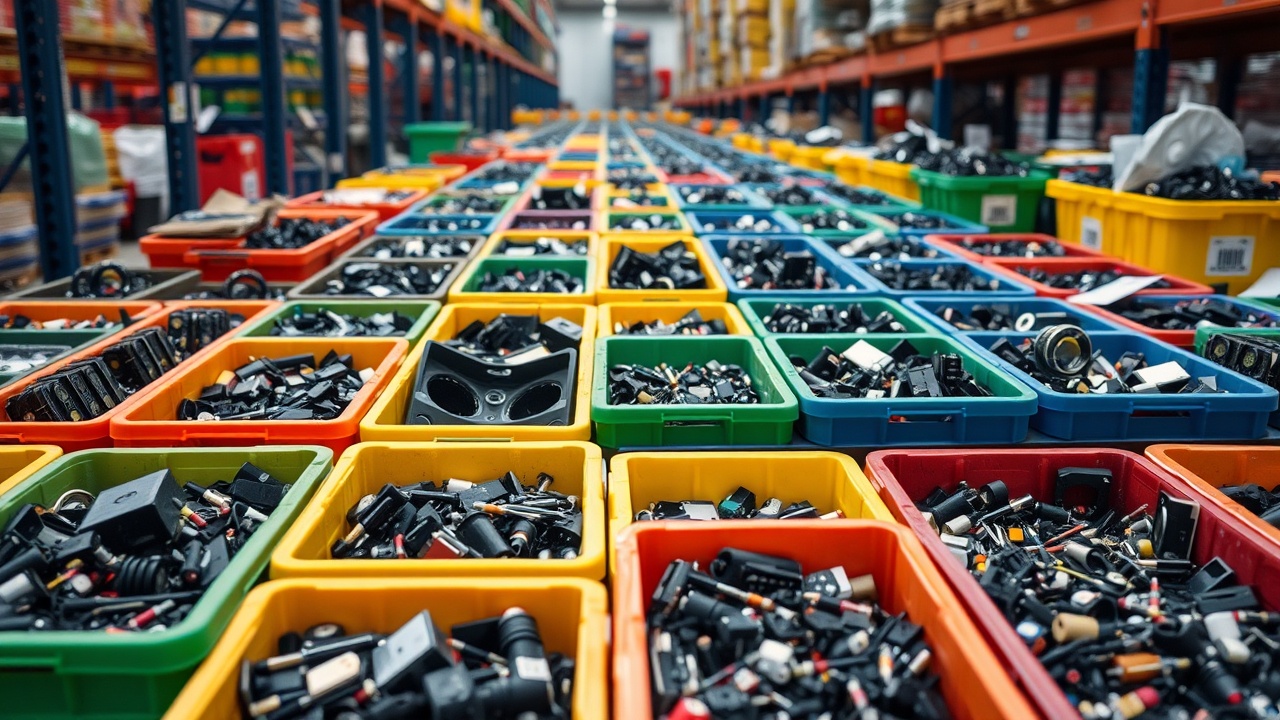
Professional Waste Electrical and Electronic Equipment (WEEE) vs. Domestic WEEE: What Changes for VAT Numbers
A point often overlooked by general articles is the distinction between household and professional WEEE. If you have a business, you can't simply go to the municipal eco-center (unless there are specific agreements).
- Household Waste Electrical and Electronic Equipment From private homes. Management is handled by Collective Systems and funded by manufacturers. It's all free for the citizen.
- Professional WEEE Coming from economic, administrative, or industrial activities.
- Historical Disposal: If you decide to dispose of old office PCs without buying new ones, the disposal is at your expense. You must contact an authorized company, complete the FIR (Waste Identification Form), and pay for the service.
- Disposal with Purchase If you buy new PCs to replace old ones, the manufacturer/distributor of the new ones is obligated to take back the old ones (principle of Extended Producer Responsibility).
Beware of "Dual Use": Many products (like a laptop or a monitor) are defined as "Dual Use" because they could be used both at home and in the office. Generally, if the quantity is limited and compatible with domestic use, they can be managed as household WEEE. However, local regulations vary.
Urban Mining: Why WEEE are "Urban Mines"
The term "Urban Mining" perfectly describes the future of the circular economy. To understand the economic importance of WEEE, let's look at the numbers.
Extracting metals from traditional mines is expensive, polluting, and energy-intensive. Extracting them from WEEE is much more efficient.
- Gold In one ton of raw ore extracted from a mine, there are, on average, a few grams of gold. In one ton of smartphone electronic boards, there can be over 200 grams.
- Concentration WEEE are true resource reservoirs. Recovering aluminum from recycling requires 95% less energy compared to producing it from virgin bauxite.
- Strategic Independence Europe is poor in critical raw materials (like cobalt and lithium for batteries). Recovering them from our waste makes us less dependent on imports from unstable third countries.
However, recycling must be done in certified facilities. "DIY" or illegal recycling (often exported to developing countries) is a disaster: cables are burned to recover copper, releasing dioxin into the air. That's why it's crucial to stay within the legal circuit.
The Treatment Cycle: What happens after harvest?
You delivered your old oven. Now what? The journey is fascinating and highly technological.
- Safeguarding (Remediation): This is the priority phase. Before breaking anything, dangerous components are removed: batteries, capacitors, oils, and especially the motors of refrigerators containing gas.
- Shredding Large machinery reduces the device to pieces a few centimeters in size.
- Magnetic Separation Powerful magnets attract iron and steel, separating them from the flow.
- Eddy Current Separation: This technology "shoots" non-ferrous metals (aluminum, copper) away, separating them from plastic.
- Optical and Densimetric Selection: Advanced sensors recognize different types of plastic or separate materials based on specific gravity.
The final result is "Secondary Raw Materials" ready to be sold to foundries and plastic industries to create new products, closing the loop of the circular economy.
In-depth Frequently Asked Questions (FAQ)
To complete this guide, we will answer the most specific questions that often go unanswered.
Are printer cartridges WEEE?
It depends. If the cartridge contains an electronic chip (as almost all modern ones do), it is technically WEEE (R4). However, there are specific channels for printing consumables (often called "eco-boxes") that facilitate their remanufacturing. It is best to dispose of them in the containers dedicated to used consumables or return them to specialized stores.
Is the electronic cigarette WEEE?
Absolutely yes. Both battery packs and disposable devices (vapes) are WEEE R4. Disposable vapes are particularly harmful if discarded on the ground because they contain lithium batteries that can catch fire or pollute. They should be returned to tobacco or electronics stores (One against Zero).
What should I do with the data on my old PC/smartphone?
Before returning an R4 device, it is your responsibility to erase the data. Back up your data, then perform a factory reset. Remove any SIM cards or SD memory cards. Recycling facilities physically destroy memory (shredding), ensuring privacy, but it's best not to take risks during transit from the bin to the facility.
I found some WEEE abandoned on the street. Can I take it?
Legally, appropriating someone else's waste (even if abandoned) can be considered a crime, but more importantly, dismantling it on the street to extract copper is illegal and severely punished. The right thing to do is to report the abandonment to the local waste management company for collection (they often have specific services for "abandoned bulky items").
Conclusion
Managing WEEE isn't just a matter of following rules or avoiding fines. It's a necessary awakening. Every electronic device we own has a very high "environmental cost" to produce; extending its life as much as possible and, ultimately, ensuring its proper recycling, is the only way to make our technological lifestyle sustainable.
l Correct disposal of WEEE, the Recycling and the e-waste recycling are fundamental to respecting the Current WEEE regulations and protect the environment.
Each electrical or electronic equipment It's a resource, not just waste.
Related articles
In-depth insights from our team on metal recovery, WEEE, photovoltaics, and remediation.
Metals
Scrap Metal Prices: How Prices Are Formed
Metal Scrap Prices: How Copper, Iron, and Aluminum Prices Are Formed Selling scrap metal to a...
Metals
Where to Sell Copper, Iron, and Aluminum in Calabria: The Complete Guide
Where to Sell Copper, Iron, and Aluminum in Calabria: The Complete Guide Selling metal scrap at the right price requires...
Metals
Complete Guide to Scrap Metal
Quotations, Disposal, and Regulations in Italy In the context of the circular economy, few resources are as valuable as scrap metal....
In-depth look at WEEE and electronic waste
GoMetal Resources for WEEE classification, FIR, corporate take-back, and environmental traceability.